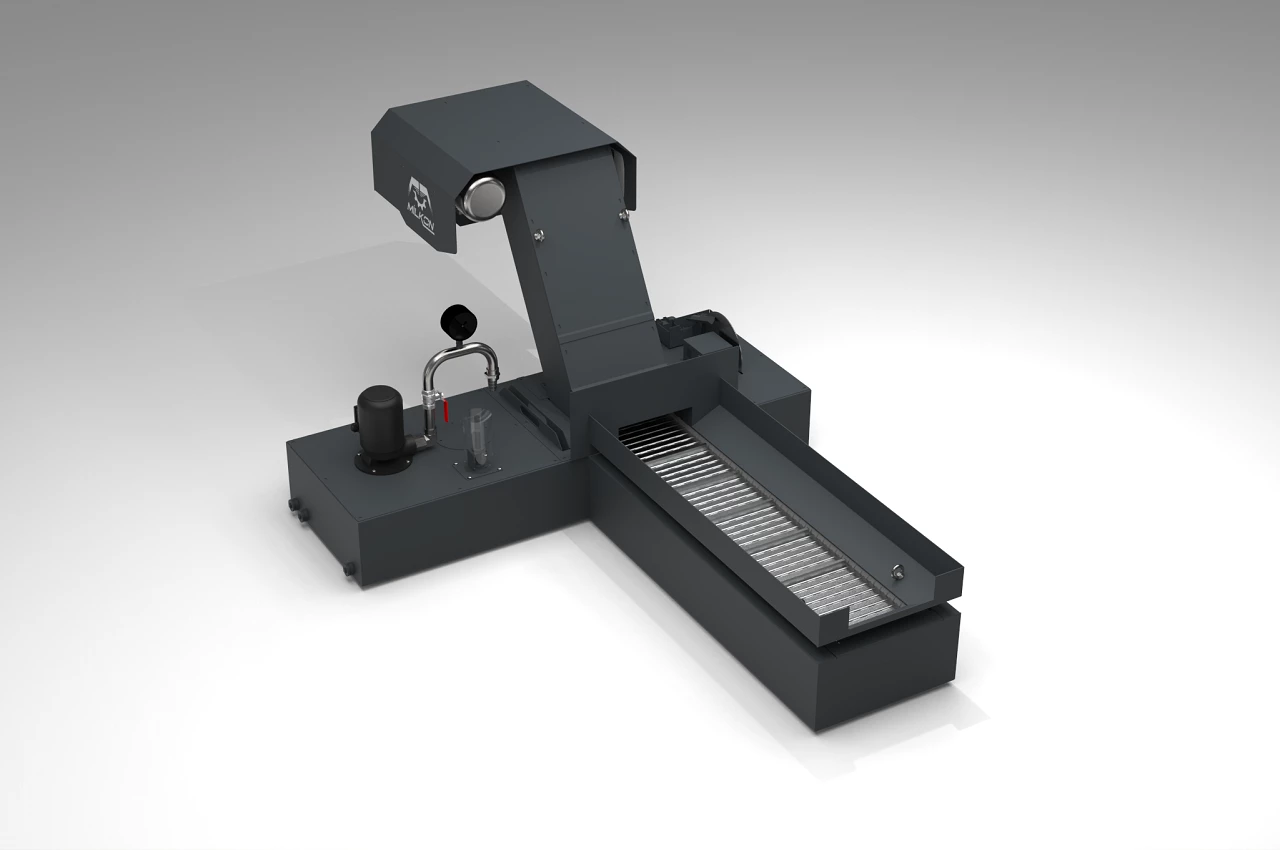
Metal Chip Recycling: Centrifuge and Chip Crusher Guide

Chips from CNC machines carry a significant amount of coolant. Sending these oily chips straight to scrap means losing valuable fluid, getting a lower scrap price and contaminating floors and the environment. Chip recycling systems turn this loss into savings.
Hidden costs of oily chips
- Coolant loss: fluid leaving with the chips has to be bought again.
- Lower scrap value: wet, bulky chips fetch less than dry, compact chips.
- Handling and storage: stringy chips take up space and bins fill quickly.
- Safety and environment: dripping oil makes floors slippery and complicates waste management.
How does a chip centrifuge work?
A chip centrifuge spins chips at high speed and separates the fluid by centrifugal force. The recovered coolant can be filtered and reused, while the dry chips go to scrap or briquetting. Efficiency is highest with short, broken chips.

Why use a chip crusher?
Long, curly chips unbalance the centrifuge, wrap around conveyors and fill bins. A horizontal chip crusher breaks these nests into short pieces and:
- significantly reduces chip volume,
- improves fluid separation in the centrifuge,
- enables automatic transport with screw and belt conveyors.
Example recycling line
- Chips are carried from the machine by a chip conveyor.
- Long chips are shortened in the crusher.
- Crushed chips are fed to the centrifuge by a screw conveyor.
- Recovered coolant is filtered and returned.
- Dry chips go to a bin or briquetting press.
Who benefits most?
Shops producing large daily chip volumes, running several machines or machining valuable metals such as aluminium and brass usually see a fast return. Chip type, daily volume and plant layout should be assessed together to define the right configuration.
See all solutions on our chip recycling systems page.
Frequently Asked Questions
How much coolant can a chip centrifuge recover?
It depends on chip type, material and how much fluid the chips carry. Separation is most efficient with short, broken chips.
Is a chip crusher required before the centrifuge?
If long, stringy chips are produced, yes. The crusher brings chips to a size the centrifuge can process evenly and efficiently.
Can recovered coolant be reused?
Yes. After passing through a suitable filtration system, the recovered fluid can be returned to the machines.