How to Choose a Chip Conveyor: CNC Type Guide

A poorly chosen chip conveyor means clogging, coolant loss and unplanned downtime. The key to choosing the right one is knowing the shape, material and volume of the chips your machine produces. This guide summarises the most common CNC chip conveyor types and when to use each.
1. Know your chips first
The first question is “Which material am I cutting, and with which process?” Long, curly steel chips and fine cast-iron dust cannot be handled efficiently by the same conveyor.
- Long / stringy chips (steel, stainless, aluminium turning): form bird’s nests and need a robust carrier.
- Short / broken chips (milling, drilling): can be handled by both hinged belt and scraper types.
- Fine / powdery chips (cast iron, aluminium, grinding): stay suspended in the coolant and require a scraper or magnetic solution.
2. Hinged steel belt chip conveyor
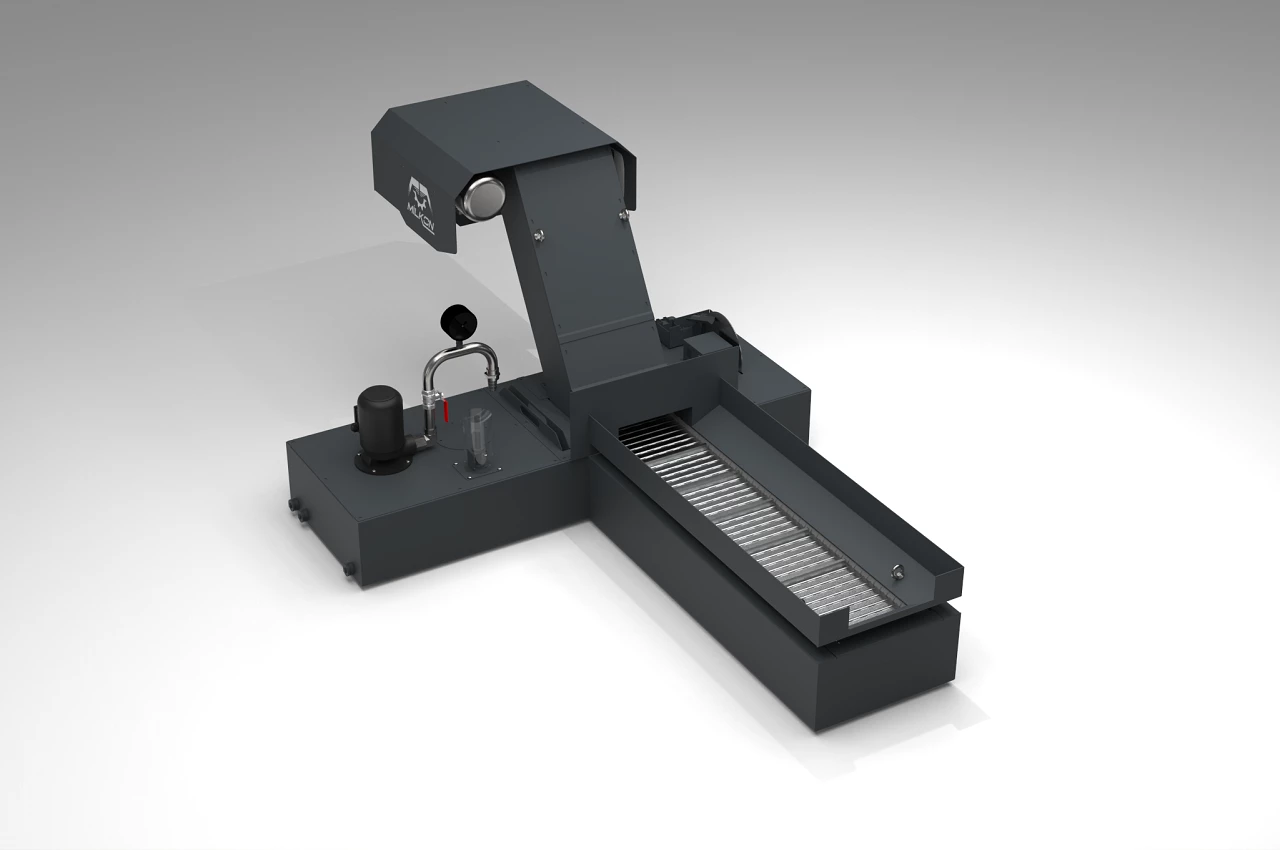
The hinged steel belt chip conveyor is the most widely used type on CNC machines. It reliably carries long, curly and high-volume chips. With fine chips, particles can slip between the plates and settle in the tank, so additional filtration should be considered.

3. Scraper conveyor
The scraper chip conveyor continuously cleans the tank floor with chain-driven scraper blades. It is ideal for cast iron, aluminium and short chips, prevents sludge build-up and extends coolant life.
4. Magnetic conveyor
Magnetic conveyors move ferrous chips with magnets travelling beneath a stainless steel housing. Since no moving part touches the chips, wear and jamming are minimal. They are a strong choice for fine ferromagnetic chips and grinding sludge, but cannot be used with non-magnetic materials such as aluminium or brass.
5. Screw (auger) conveyor
For tight spaces and horizontal transport inside the machine, a screw conveyor is a compact solution. It moves short, broken chips with a rotating auger; very long chips may wrap around it, so a chip crusher is often recommended.
6. Drum filter chip conveyor
If you want to convey chips and filter coolant at the same time, a drum filter unit combines both in one body. The drum retains fine particles and clean coolant returns to the machine, directly extending pump and tool life.
Quick comparison
| Chip type | Recommended conveyor |
|---|---|
| Long, curly steel chips | Hinged steel belt |
| Short chips + fine particles | Scraper or drum filter |
| Cast iron / grinding sludge | Magnetic or scraper |
| Aluminium (fine chips) | Scraper or drum filter |
| Tight space, short chips | Screw conveyor |
Other questions to ask
- How many chips are produced per hour, and how many shifts will the conveyor run?
- Does the discharge height suit your chip cart or bin?
- Do you use high-pressure through-spindle coolant? If so, finer filtration is required.
- What are the machine’s tank dimensions and conveyor inlet?
See all options on our chip conveyors page. If your existing conveyor is no longer sufficient, consider a renovation before buying a new one.
Frequently Asked Questions
What is the most common chip conveyor for CNC machines?
The hinged steel belt chip conveyor. It carries long, curly chips reliably and is the standard solution on lathes and machining centres.
Which conveyor is suitable for aluminium chips?
Aluminium is non-magnetic, so magnetic conveyors cannot be used. For fine aluminium chips, scraper or drum filter conveyors give better results.
Can a chip conveyor be custom-built for my machine?
Yes. Conveyors can be built to the machine’s tank dimensions, inlet and discharge height. Use our quote form to share your measurements.